


Understanding resistance to DIM herbicides

with Peter Boutsalis, research scientist, University of Adelaide
Resistance to the DIM herbicides has been a long time coming, but it seems to have arrived with a vengeance.
Dr Peter Boutsalis of Plant Science Consulting and the University of Adelaide, says that resistance to clethodim and butroxydim (e.g. Factor) is due to target-site resistance, even though it has taken longer to ‘arrive’ than is usually expected for herbicides that target a single site within the weed.
“All Group 1 herbicides target ACCase enzyme production in ryegrass,” he says. “The reason resistance has taken so long to emerge in ryegrass populations is that mutations conferring clethodim resistance were extremely rare, at much less than one plant in a million carrying the resistant gene. At label rates of clethodim of 150 to 500 mL/ha there were once very few, if any, survivor plants in a paddock.”
These few survivors have remained under the radar for a long time, until a sharp increase in the intensive use of DIMs (particularly clethodim and butroxydim) has selected for the rare mutations and conferred strong resistance on the ryegrass population in some paddocks.
“Clethodim resistance can’t be ignored,” says Peter. “Plants that survive must be controlled with other tactics to prevent resistance levels from increasing. Resistance testing is the only way to identify resistance levels and herbicide control options that still work on resistant plants.”
The WeedSmart Big 6 strategy includes three herbicide stewardship pillars • Mix and rotate herbicide MOA, • Spray effectively, and • Stop weed seed set – to manage herbicide resistance risk. The other three pillars provide non-herbicide tools to drive down the weed seedbank • Diverse rotations, • Competitive crops, and • Harvest weed seed control.
Group 1 resistance mechanisms
Although very rare, there are at least eight mutation sites, each with multiple mutations, that can confer Group 1 resistance in annual ryegrass. When a mutation is present in a plant, the herbicide cannot bind with the enzyme, so the enzyme can continue working and the plant lives.
Each mutation confers a different factor of resistance, some weak and some strong. In a paddock situation following a Group 1 herbicide application, some plants remain healthy, some are damaged and then reshoot, and others are dead.
“Increasing DIM application rate often initially improves control because plants with the weakest DIM mutations are killed,” says Peter. “However, the ryegrass plants that survive the higher rate can cross-pollinate with other survivors and accumulate mutations, resulting in stronger resistance levels in the following generation.”
As a kicker, a ryegrass plant with DIM resistance will not be killed by other Group 1 herbicides, i.e. DIM resistance = FOP and Den cross-resistance, even if the plant has not been previously exposed to FOPs or Dens (pinoxaden, e.g. Axial).
Mix and rotate; Spray effectively; Stop seed set
In paddocks with established clethodim resistance in ryegrass, pre-emergent herbicides provide very effective ryegrass control, allowing competitive crops to establish. Peter says that adding pre-emergents to the herbicide program must be accompanied by practices that stop late-emerging weeds from setting seed.
“Using pre-emergent herbicides places selection pressure on weed seed dormancy. We are seeing a very clear shift toward later-germinating ryegrass that can evade, rather than survive, the pre-emergent herbicide tactics,” he says.
In areas with less historic use of DIM herbicides, adding butroxydim (e.g. Factor) to clethodim can improve ryegrass control in legumes. Although mixing metazachlor (e.g. Tenet) with clethodim in canola doesn’t improve the selective knockdown effect on ryegrass, it can stunt root growth and reduce seed production. Both these mixes can buy time to implement multiple WeedSmart farming system tactics to keep ryegrass numbers low and minimise the impact of herbicide resistance.
A critical part of this process is testing for susceptibility before enacting a herbicide program for next season. Keep in mind that not all weeds that survive clethodim treatment are resistant. Other reasons for survival include cold temperatures at application time, larger or older plants, or a low-dose application due to various factors. Peter says that while spraying clethodim on small plants in warm weather gives the best result, spray timing should prioritise the warm conditions over the plant size.
“Younger ryegrass plants are more sensitive to clethodim, even if they have resistance. However, if weather conditions are likely to be better the next week, it is best to delay spraying clethodim until then, even though the weeds will be larger,” he says. “Also, spraying before a frost is better than after a frost.”
Make sure every drop of herbicide counts – use good-quality herbicides and adjuvants, high water rates and include ammonium sulfate (AMS) in the tank, set up and operate the sprayer correctly and target small plants in mild conditions.
Results from paddocks surveyed in South Australia as part of the GRDC-funded national random weed survey in 2024 indicated widespread high-level resistance to Clethodim EC240 at 500 mL/ha plus 1% Hasten.
Peter says that although the number of ryegrass plants present in paddocks was generally very low, 68 per cent of paddocks surveyed in South Australia had ryegrass plants with clethodim resistance. This was a dramatic increase from 14 per cent of paddocks having resistant ryegrass in the 2020 survey. Resistance levels varied between regions in South Australia.
“This upshot is that although ryegrass numbers are still low, the majority of plants present are resistant to clethodim, and therefore all Group 1 herbicides, to varying degrees,” says Peter. “While numbers are low, growers have the opportunity to adopt a range of WeedSmart tactics to eliminate these resistant plants and stop them from setting seed.”
WeedSmart provides a practical planning framework and farming systems approach to integrated weed management to keep weed numbers low, maximise crop yield and improve long-term farm profitability.
More resources
Herbicide resistance testing services
Webinar recording: The rise and fall of clethodim
GRDC Update Paper for more detail on the 2024 survey results
Clethodim resistance spike in canola rotations
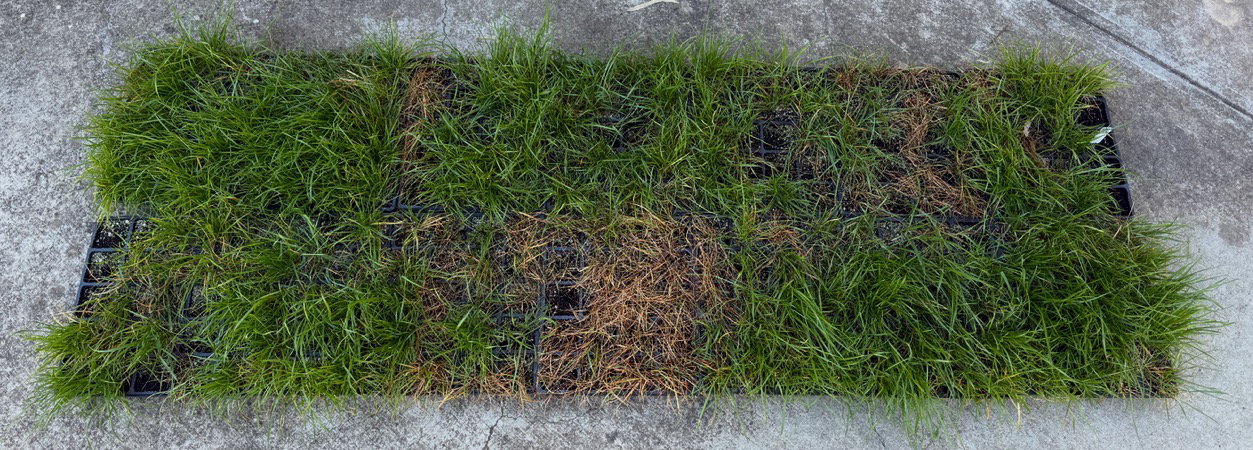
In a random weed survey in 2024, revealed that 68 per cent of paddocks surveyed in South Australia had ryegrass plants with clethodim resistance. This was a dramatic increase from 14 per cent of paddocks having resistant ryegrass in the 2020 survey. (Photo: Plant Science Consulting)
