


WeedSmart Week 2026 guest speakers

WeedSmart Week 2026 in Griffith, NSW, brought together a wealth of knowledge from innovative growers, leading agronomists and industry experts.
Read on to meet this year’s incredible guest speakers!
Check out the full program and highlights from this event here.
Updated 5 September 2026
Mitch Allen
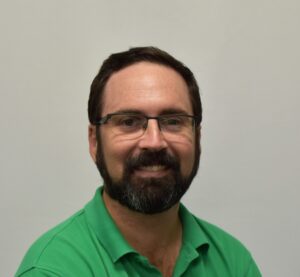 Mitch is the Commercial Technical Lead at Nufarm, where he works to identify and deliver crop protection solutions that provide value for growers and advisers.
Over the past 14 years with Nufarm, Mitch has focused on evaluating and developing crop protection solutions for broadacre farming systems, particularly winter crop and fallow herbicide programs. His experience includes extensive work with glyphosate, 2,4-D and Group 14 herbicides.
With experience spanning agronomy, field trials and product development, Mitch enjoys the ever-changing technical challenges of crop protection and the opportunity to translate research into practical, on-farm outcomes.
Simon Barbary
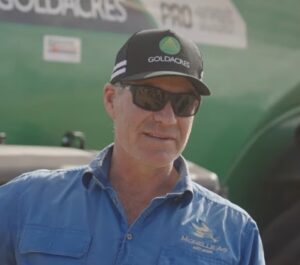
Simon farms with his wife, Janelle, and their three boys in Victoria’s Southern Mallee, operating a broadacre cropping enterprise. Having always had a keen interest in technology and precision agriculture, Simon is focused on improving efficiency, sustainability and profitability through the practical adoption of emerging farming systems. He is working with autonomous machinery through the Australian-developed Ornata.ag platform, exploring how autonomy can improve timeliness, labour efficiency and whole-farm productivity. Passionate about exploring new technologies in commercial farming conditions, Simon is committed to identifying practical solutions that enhance productivity, profitability and long-term sustainability in Australian grain farming.
 Ian Barber
 Ian Barber
Ian is a fifth generation farmer whose family has been farming at Merriwagga for over 100 years.
Ian studied farm management at Marcus Oldham College in Geelong and worked on merino studs in the Riverina and mixed farming operations in WA before returning to the family farm.
Ian was involved in the establishment of the Merriwagga CWFS site, along with DPI and private agronomy firms at Sylvanham, which ran for over 25 years. This site was very beneficial in the development of minimum tillage farming and crop rotations in the area.
Ian was an early adopter of controlled traffic farming and optical spraying while also maintaining a self-replacing merino flock striving to increase wool cut and fertility.
The balance between cropping and grazing has been managed with strategic saltbush planting and the use of containment and feedlot feeding to ensure optimum ewe condition scores whilst maintaining ground cover and reducing soil compaction on cropping ground.
Nick Bleasdale
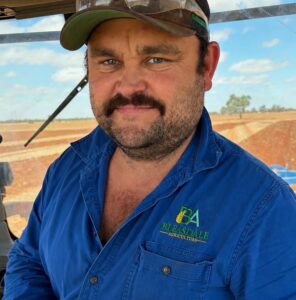 Nick Bleasdale and his wife, Steph, operate Bleasdale Agriculture near Hillston, NSW, where they focus on continuous dryland cropping alongside a contract spraying, sowing and spreading business.
Nick studied Farm Business Management at Marcus Oldham in Geelong before spending several years as Operations Manager on a corporate grain farm. During this time, he gained extensive experience leading large teams and coordinating efficient 24-hour farming operations.
He is passionate about controlled traffic farming and adopting profitable, sustainable farming practices. He has a strong interest in crop rotation, clean fallow management, and continuously improving farming systems to enhance productivity and long-term sustainability.
Shaun Bourchier
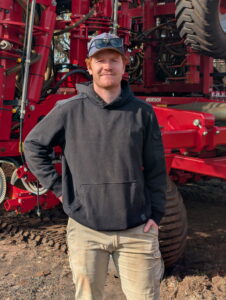 Shaun is a grower based in Barellan, NSW. Alongside his parents, wife and younger brother, Shaun farms a predominantly continuous cropping enterprise, although his younger brother ended the family’s nearly 20-year livestock-free streak by introducing sheep in 2025.
The business has long invested in integrated weed management, incorporating diverse crop rotations, windrow burning and the adoption of an iHSD in 2020. Variable-rate liming, combined with strategic deep tillage to address sand rise pH constraints, has improved soil health, increased returns and expanded opportunities to successfully grow pulse crops, including lentils.
Managing a diverse range of soil types—from cracking creek clays with levelled gilgais to red mallee sands—requires a flexible approach. Continually adapting rotations to suit each soil’s strengths, limitations and seasonal conditions remains key to the farm’s long-term productivity.
Emily Chambers
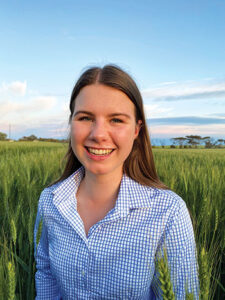 Emily is a WeedSmart Southern Extension Agronomist (SA) based in Freeling, SA. She works for Pinion Advisory as an Agribusiness Consultant, focusing on technical agronomy for broadacre cropping farms.
As an early career consultant, Emily is committed to preserving effective weed management tools for future generations by implementing the WeedSmart Big 6. She is interested in understanding the challenges of different farming systems and working with growers to implement practice change with a whole of business approach.
Jason Cheatley
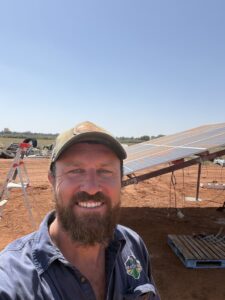 Jason is a fulltime spraying contractor. In 2009, while based in Rochester, Victoria, he bought his first boom spray, a gooseneck sprayer, before expanding to a truck mounted boomspray. Here he serviced dryland and dairy farms, as well as a few clients in central NSW depending on seasonal conditions.
In 2013, Jason moved to Hillston, NSW, and purchased a spray coupe to work on irrigated and dryland farms. Over the years he has expanded into four self-propelled boom sprays for work on dryland and summer irrigated crops.
He has recently scaled back to 3 machines, servicing three large corporate farms. Jason is also the NSW representative for the Australian Ground Sprayers Association and encourages new members to join.
Greg Condon
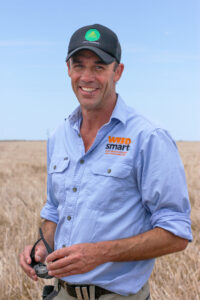 Greg is a WeedSmart Southern Extension Agronomist (Vic and NSW) and is based in Junee, NSW. Greg runs Grassroots Agronomy with his wife Kirrily Condon and has more than 20 years experience in the industry.
He is particularly passionate about diverse farming systems and the adoption of cultural tools, such as crop competition, for reducing weed seed banks.
As WeedSmart’s NSW local, Greg is this year’s host agronomist. He has been instrumental in putting together this WeedSmart Week event in Griffith.
Mark Congreve
 Mark Congreve is a senior consultant with ICAN Rural, primarily conducting research and extension for the grains industry. Prior to 2012, Mark spent almost 25 years developing and commercialising several chemical and biotech solutions for two of the leading global R&D multinational companies. During this time, he was heavily focused on solutions for the northern grains region, cotton and sugarcane.
Mark runs herbicide behaviour training for agronomists nationally – focusing on how to optimise herbicide performance in the face of ever-increasing resistance. Current research projects are focused on managing problems weed in northern NSW and national research programs looking at the fate of residual herbicides in soil. Mark is also the lead author of numerous technical manuals, videos and factsheets developed for the Grains Research and Development Corporation, and has been working on solutions for feathertop Rhodes grass, barnyard grass, fleabane and sowthistle for almost 20 years.
Bellamy Dalton
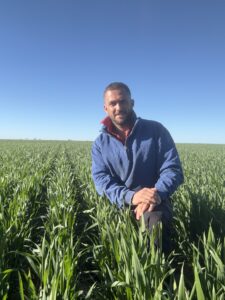 Alongside his parents and younger brother, Bellamy is running a family farming operation across 21,000Ha around Hillston. They take pride in attention to detail at scale and know the importance of doing the job properly and on time for good weed control. The Daltons grow wheat, barley, canola, lentils, field peas, lupins and vetch, and find that a good rotation and smart chemical choices within that rotation take care of most of their weed control problems.
The family don’t use a set rotation and make crop type choices based on weed issues and soil types for each paddock as well as amounts of stored moisture. Summer weed control has many different challenges; fleabane and feathertop Rhodes are the main problem weeds and they are finding that a mixed approach of optical sprayers, residual chemicals and cultivation gives enough options to keep their paddocks clean.
The way Bellamy and his family manage weeds today is different in many ways from 10 years ago and with a rising cost of production, advancing technologies and tightening regulations, they’re sure in 10 years time it will be completely different again. They’re always learning and open to change.
Chris Davey
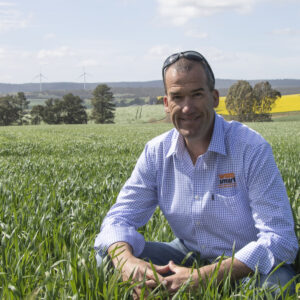 Chris has been an agronomist on the Yorke Peninsula for 30 years. He runs his own independent consultancy company, Next Level Agronomy, and was a founder of the farmer group ‘Northern Sustainable Soils’.
Chris joined WeedSmart as the southern extension agronomist (SA and Vic) in 2020. He has a passion for helping his clients develop non-chemical (IWM) tools to combat annual ryegrass resistance and is a keen promoter of these strategies in the industry.
Sam Fensom
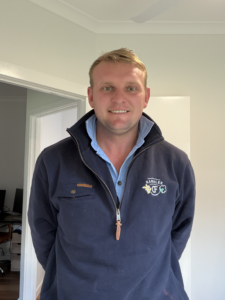 Sam is a mixed farmer from Hillston, NSW. Along with his father and brother, they run an irrigated cropping program consisting of cotton and corn during summer, and wheat, barley, canola, faba beans and lentils during winter. They have a dryland winter program consisting of wheat, barley, canola, field peas and vetch, as well as a herd of Angus cattle breeders. Maintaining channels and roads is a huge challenge in the farm operations, with some of the bigger problems being rye grass through the winter, along with windmill grass and fleabane through the summer. The sensitivity of the crops they grow makes combating these weeds difficult. A combination of steel and residual herbicides has proven to be the most effective way to manage these problem weeds long term.
Barry Haskins
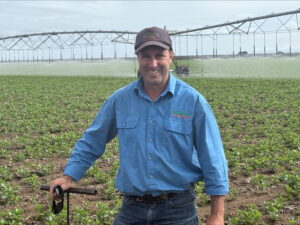 Barry Haskins is the Director and Consultant Agronomist of Ag Grow Agronomy and Research. Based in Griffith, NSW, Barry and his team provide private agronomy and business consulting services to large-scale, low-rainfall grain and mixed farming enterprises, as well as high-input irrigated farming businesses across south-western NSW.
Complementing these advisory services is the company’s independent research division, which collaborates on projects with the GRDC and private industry partners, as well as conducting in-house research. This work focuses on developing evidence-based solutions to agronomic and business challenges that limit farm profitability, productivity, and long-term sustainability.
Barry’s passion has always centred on delivering practical, evidence-based agronomic and business solutions for farmers. He places strong value on building trusted relationships with clients, developing highly skilled and motivated staff within the region, and creating rewarding career opportunities for the next generation of agricultural professionals.
In addition to his consulting and research work, Barry farms more than 1,000 hectares of broadacre dryland crops with his team. This commercial farming operation provides a valuable platform for testing and validating management practices, ensuring that recommendations made to clients are grounded in real-world farming experience.
Matt Headrick
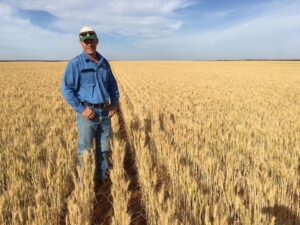 Matt Headrick is a Grower from Merriwagga NSW, who manages a dryland cropping and Livestock enterprise.
Since beginning farming with his wife and father-in-law in 2001, Matt has focused on adopting innovative practices that improve productivity and sustainability.
Over the past 25 years, the business has evolved from conventional cultivation to direct drilling and continuous cropping.
Operating in an average annual rainfall of just 14 inches, efficient moisture conservation and effective weed management are essential, which the family have achieved through implementing windrow burning to combat Ryegrass resistance and diversifying into sheep, cattle and grazing crops.
Feedlot operation and containment pens were a way to conserve ground cover on cropping areas. Matt continuously seeks practical solutions to build a resilient, efficient farming business.
Eric Koetz
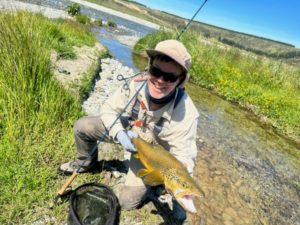 Eric has spent 35 years working as a Technical Officer and Research Agronomist in southern farming systems, firstly at CSIRO and then with NSW DPIRD.
During his five years at CSIRO, Eric worked on wheat physiology and nitrogen, break crop research and farming rotations, including mixed farming systems. He moved to Wagga Wagga in 1996 to take up a position with the NSW Department of Agriculture.
Since then, he has spent 30 years at NSW DPIRD working across grains and cotton farming systems, with stints in pasture, pulse and cereal research. The majority of Eric’s time (20 years) has been spent working on a range of weed research projects focussing on herbicide resistance and integrated weed management. For the last 10 years Eric has been the Technical Lead for Weed Management in the CottonInfo extension network and a member of the Cotton Herbicide Technical Panel.
Bec Marshall
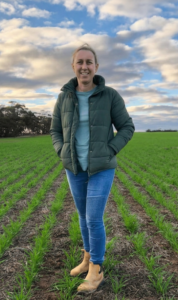 Bec farms with her husband Ash and their four young children at Normanville, in the south-east Victorian Mallee. The Marshalls farm in a low rainfall environment but their enterprise also includes irrigated cropping, so they are familiar with the challenges both systems present.
Bec worked in independent agronomy pre-kids and maintains a strong interest in all things agronomic. Resistant ryegrass has been a major challenge and is something which Bec has adopted a systems approach to managing. Diversity in rotation and weed control strategies have been the key to successfully navigating these ryegrass issues. Timing is always a major focus and Bec also has a particular passion for understanding and maximising water use efficiency in their crops.
Andrew McFadyen
Andrew is an experienced independent agricultural consultant based in Lake Cargelligo in the central west of New South Wales. With extensive practical experience in broadacre cropping and mixed farming systems, Andrew has built a strong reputation for delivering practical, research-based agronomic advice that improves productivity, profitability and long-term sustainability for farming businesses.
Working closely with growers across central west NSW, he specialises in crop and pasture agronomy, weed management, soil fertility, farm business planning and risk management. Andrew is passionate about helping producers adopt new technologies and evidence-based practices that enhance resilience and maximise returns in challenging seasonal conditions.
Andrew has been an active contributor to the Australian grains industry through his involvement with the Grains Research and Development Corporation (GRDC), including serving on the Northern Panel and is the current Chairman of Grain Orana Alliance.
Known for his practical approach, technical expertise and commitment to regional agriculture. Andrew remains dedicated to advancing sustainable farming systems and strengthening the profitability and resilience of grain-producing businesses throughout New South Wales.
Paul McIntosh
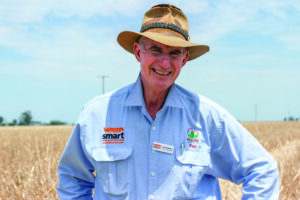 Paul is the WeedSmart Northern Extension Agronomist, based in Toowoomba, Qld.
With more than 40 years of agronomy experience in the northern region, which offers both winter and summer crop options, Paul is familiar with the unique farming issues and opportunities that come with such diversity in the region.
Mathew Molloy
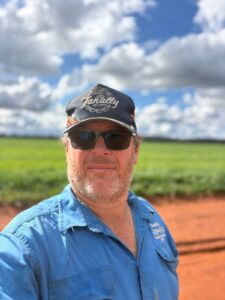 Mat is the owner and manager of Tanally Pty Ltd, a broadacre cropping enterprise at Rankins Springs and Tabbita in the NSW Riverina. Together with his wife Monica, they grow wheat, barley, canola and pulse crops across a range of soil types and a variable 400 mm annual rainfall environment. Crop selection and seeding decisions are based on soil moisture, crop rotation and weed burden, ensuring the farming system remains flexible and responsive to seasonal conditions.
Driven by a passion for innovation, Mathew is continually looking for ways to improve productivity while reducing the cost of production. He was an early adopter of camera spraying technology and has since taken the next step into autonomous farming, operating two SwarmFarm robots equipped with camera sprayers and supported by automated chemical fill stations. These technologies have transformed the efficiency of his fallow weed control program reinforcing accurate and timely application.
Weed management is one of Mathew’s greatest areas of interest. With increasing pressure from herbicide resistance, rising input costs and the likelihood of tighter regulations around chemical use, he believes growers need to continually adapt and seek practical, integrated solutions. Mathew enjoys sharing both the successes and challenges of adopting new technology and is always keen to learn from other growers. He believes the future of Australian grain farming lies in embracing ideas, innovation and practical solutions that improve profitability while building more resilient farming systems.
Peter Newman
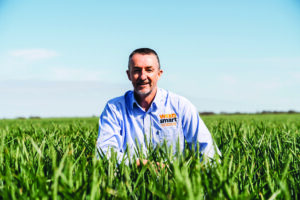 Peter is the AHRI insight writer and WeedSmart Western Extension Agronomist. He grew up in Perth and went on to study Ag Science at UWA. He has previously worked as an agronomist and as research officer for DAFWA.
Peter joined WeedSmart in 2013 and has been an integral part of its success, contributing his knowledge of extension theory and agricultural systems. Pete lives in Geraldton WA.
Matthew Notley
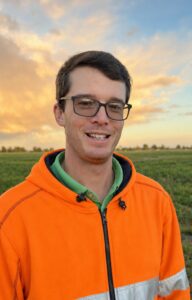 Matthew is Acting Farm Manager at Warakirri Cropping’s Cowabbie/Mukoora aggregation near Ardlethan, NSW. His agricultural career began with a harvest at Beckom after finishing Year 12 on the sunny Central Coast, this followed into a broadacre cropping traineeship for two years, followed by a brief stint working with livestock. He returned to cropping while studying a bachelor’s degree by distance through UNE, before spending seven years at Tocal Agricultural College as the Precision Agriculture lecturer. Matthew joined Warakirri Cropping as Farm Operations Manager in 2022 and has been acting as Farm Manager for the past two years.
Matthew has a strong focus on using production, financial and spatial data to improve decision-making, particularly around spray timeliness, application quality, and looking into autonomy. The CowMuk team operates WeedIT and Bilberry optical spot-spraying systems and recently converted a 10-year-old Goldacres G6 to a Millennium boom fitted with WeedIT cameras. They have also adopted AgZen onto a self-propelled sprayer to monitor and optimise spray coverage. Spraying is supported by load-cell batching unit to ensure accuracy and a nurse-truck system capable of filling two booms simultaneously for six-minute in paddock fills.
The weed-management strategy at CowMuk is grounded in WeedSmart’s Big 6, including a four-year rotation with double breaks, narrow rows, optimised spray efficacy, diverse herbicide chemistry informed by resistance testing, crop-topping and chaff decks. Matthew and his team are regular attendees at the Spray Safe & Save sessions with Craig Day. Matthew and his team also enjoy working through the practical compromises and complexities of farming with the Grassroots Agronomy team and readily admits they do not always get everything right.
Hayden Petty
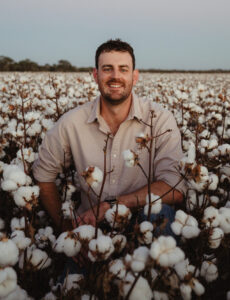 Hayden is a consulting agronomist with Summit Ag, based in Griffith NSW. He works across irrigated and dryland farming systems in the Riverina and Murrumbidgee irrigation areas, advising growers across cotton, grains and pasture systems. Hayden has a strong interest in practical, evidence-based agronomy, herbicide resistance management and helping growers make sound paddock decisions that fit the broader farming system. He is involved in CRDC-supported applied research with Charles Sturt University, investigating Black Root Rot in southern cotton systems, and enjoys contributing to research and extension that delivers practical outcomes for growers.
Drew Pfitzner
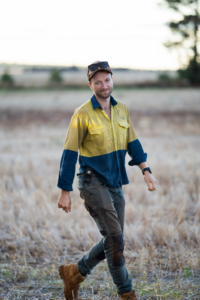 Drew farms a 3,400-hectare winter cropping operation 35km north of Griffith, NSW, alongside his father Michael. Drew grew up on the farm before studying electrical engineering at university, returning home at the end of 2018 and going on to start a family of his own — he is now a father of four.
His engineering background feeds a strong interest in technology and its practical application on-farm — from optical spot spraying to swarm bot autonomous spraying and AI-driven tools. For Drew, technology isn’t the goal in itself, but a way to solve real problems and streamline the farming operation.
Michael Pfitzner
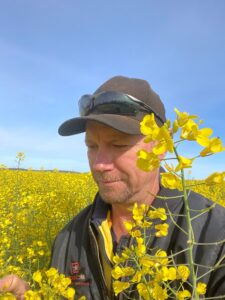 Michael runs a 3400ha dry area cropping enterprise along with his son Drew. Michael has been farming for 39 years on their property “Hill End”. They converted to CTF and disc seeding in 2008. Initially using windrow burning as a non-chemical weed seed management, they switched to chaff decks in 2015 to maintain stubble cover on paddocks where the chaff was deposited on the tram lines. The success of this strategy prompted them to look at strategic placement of different herbicide groups as a pre-em, specifically on the trams using a separate tank and nozzles on the SP Sprayer.
Andrew Ritchie
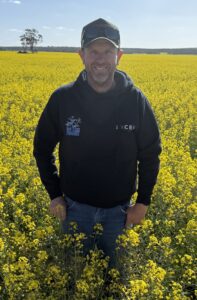 Andrew manages a 22,000 hectare continuous dryland cropping enterprise for Excel Farms, growing wheat, barley, lentils and canola. The operation has seen significant investment in soil amelioration, with a strong focus on moisture retention. On farm, they have adopted advanced weed management technologies, including two swarm bots and trailing sprayers equipped with Weed-it cameras, enabling effective control at very low weed densities. The farm also runs both disc and tyne seeding systems across the aggregation, including 18m John Deere disc seeder on 7.5″ spacings to fit an 18m CTF system. Having grown up on a farm and then having worked on a number of large-scale cropping operations, Andrew has developed extensive experience managing large-scale, efficient and sustainable cropping operations.
Greg Rummery
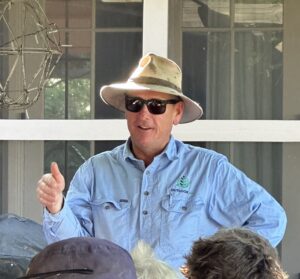 Greg Rummery is a director of the Outlook Ag team that operate an agricultural advisory business across a broad area in northern NSW. Greg is based at Walgett and heads up the agronomy service team serving this part of the Outlook Ag footprint. Through a variety of roles, he has accumulated 35 plus years experience in applied agronomy for dryland grain production and pasture systems in northern and western NSW. Greg also operates a dryland farming business east of Walgett and a grazing enterprise at Cuttabri in a partnership with his wife and family.
Greg graduated from the University of New England with a degree in Natural Resource Management. Further study in the workplace resulted in the completion of a Graduate diploma in Ag Science from CSU – Wagga Wagga. In August 2016, Greg was awarded the prestigious Brownhill Cup at the Aq-Quip field days. The award recognises his achievements in the grains industry in terms of practice change at a farm level, commitment to more sustainable production practices and his leadership role in the industry across the northern region. His understanding of zero tillage grain production systems, chickpea agronomy and grain grower technology transfer in a highly variable rainfall environment were highlights of his success in winning this highly coveted trophy.
Andrew Ryan
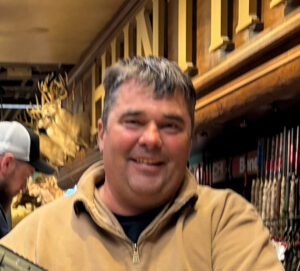 Together with his wife Bobbie, Andrew crops 4,000 hectares south of Griffith, NSW, as part of a fourth-generation dryland cereal farming family. He has been farming for the past 17 years.
Andrew and his family were early adopters of controlled traffic farming, and for the past 13 years have also been using optical spraying technology in an ongoing effort to develop better solutions for hard-to-kill weeds and improve long-term weed management outcomes on the farm.
Agriculture has always been Andrew’s passion, although the industry is becoming increasingly challenging, making it harder at times to maintain that passion. Despite this, he remains committed to farming and the opportunities it provides. Andrew has also been fortunate to be involved in motorsport, aviation, and community organisations, experiences that have broadened his perspective and strengthened his organisation, planning, and problem-solving skills, and helped value his time away from the farm.
Alex Thomas
 Originally from a remote sheep station, Alex Thomas is a high-energy, heart-led facilitator, speaker and consultant, with a passion for storytelling, sensemaking and changemaking. From farmers to fishers, truck drivers to tradespeople, community stakeholders to C-Suite – one of Alex’s greatest strengths is simply showing up as herself. She builds trust and credibility quickly, connects with people easily and loves creating conduits for hard-to-have conversations.
Making health and safety “human” is Alex’s mission, and translating tricky language into practical, relatable takeaways is her mastery. She’s known for bringing “great energy to the room”, has been described as a “Swiss Army knife of safety” and has won multiple awards for her work.
Inspired by her rural roots and her beautiful, late Dad – Chris – Alex is the Founder of From Here to Healthcare and #PlantASeedForSafety – both grassroots initiatives grounded in advocacy, storytelling and social change. Alex is a single mum to two little boys and now lives in Nairne in the Adelaide Hills.
Check out the full program here. Tickets available via Humanatix.